What’s up, gearheads and engine builders? If you’ve ever dug into a engine rebuild or just stared at a piston kit box wondering why your machinist kept nagging you about “expansion rates,” you’re not alone. I’m [Your First Name], been selling piston kits for over 12 years, and let me tell you—expansion rate isn’t some random jargon we throw around to confuse newbies. It’s the make-or-break detail that keeps engines from seizing up on you, or blowing a hole in the side of a cylinder at 6,000 RPM. Today, we’re breaking this down like we’re hanging out in my warehouse loading dock, no stuffy textbooks, just real talk about what this number actually means, why it matters, and how to nail it for your build. Piston Kit
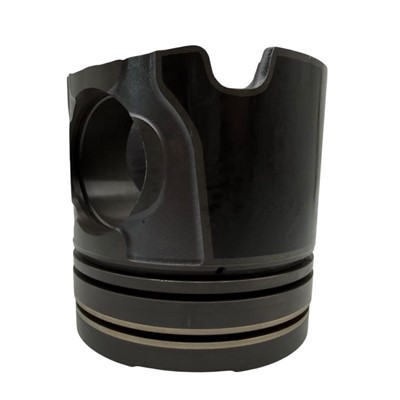
First off, let’s get the basics out of the way, no fancy acronyms (well, maybe one—CTE, but I’ll explain it). Expansion rate here refers to how much a piston (and its matching rings, which are part of our piston kits) grows as it heats up. Think about it: when you start your car on a frosty morning, that metal piston is cold, tight in the cylinder wall. But once combustion kicks in, that piston hits temps over 500°F, right? Metal expands when it’s hot, so if your piston was sized perfectly cold, when it heats up, it would lock solid in the cylinder—boom, seized engine, big tow bill. That’s where expansion rate comes in. It’s measured two ways, by the way: linear expansion per inch of piston, or total expansion across the piston’s diameter as it heats from room temp to operating temp. The actual number is tiny—like, thousandths of an inch—but that’s exactly why it’s so important. A difference of 0.001 inches here is the difference between a engine that runs smooth for 100k miles and one that’s a paperweight before you leave the driveway.
Now, why do different piston kits have different expansion rates? It’s all about the material, duh. Back in the day, almost all pistons were cast iron. Yeah, iron was tough, cheap, and had a predictable expansion rate—but it’s heavy, and it doesn’t transfer heat as well as aluminum, which is why almost every modern piston kit is aluminum alloy now. Wait, not all aluminum is the same, though. We source three main aluminum grades for our kits: 4032, 2618, and a newer hypereutectic blend. Let’s break these down like they’re different menu items at your favorite burger joint. Hypereutectic is like the value option—it has a bunch of silicon mixed in, which makes it super stable when it heats up, so its expansion rate is lower, around 0.000008 inches per inch per °F. That’s why most stock replacement piston kits use hypereutectic—they’re cheap, durable for regular driving, and don’t need super tight clearance when you build the engine. But here’s the catch: hypereutectic is heavier than the other two, so if you’re building a high-revving race engine, that extra weight kills RPM, slows you down.
Next up, 4032 alloy. That’s the go-to for most performance street/strip guys. Its expansion rate is a little higher than hypereutectic—around 0.0000095 inches per inch per °F. Why? It has less silicon, so it’s lighter, transfers heat better (meaning the piston doesn’t stay as hot, which reduces the chance of pre-ignition), and it’s stronger under load than hypereutectic. Most street performance builds that see occasional track days run 4032, and that’s what about 60% of our custom piston kits are these days. It strikes a balance that most guys don’t even notice on the street, but makes a huge difference when you’re flooring it down the strip.
Then there’s the heavy hitter: 2618 alloy. This stuff is all race engine territory. Its expansion rate is even higher, around 0.000011 inches per inch per °F. But we don’t sell this for no reason—2618 is way lighter than both hypereutectic and 4032, it can handle way more heat and detonation, and it holds its shape at ultra-high RPM (like 8,000 and up). The tradeoff? Because it expands more, you have to set your cylinder clearance a little wider when you build the engine. Mess that up, and you still get seized piston. But for guys building top-tier race engines, that tradeoff is totally worth it for the horsepower gains.
Wait, hold on—expansion rate isn’t just about the piston, right? The rings matter too. Our piston kits come with matching rings that are designed to match the piston’s expansion rate. A lot of new builders don’t get that—they’ll buy a cheap piston kit from some random brand that uses a generic ring that doesn’t account for the piston’s alloy, and that’s how you get ring blow-by or oil consumption. We test every set of kits we sell to make sure the ring gap and ring material line up with the piston’s expansion characteristics. For example, if we put a 2618 piston in a kit, we use a ductile iron ring that’s designed to expand at the same rate as the piston, so the ring doesn’t get too tight (which would kill compression) or too loose (which burns oil) when the engine heats up. That’s the stuff the big box stores skip over, and it’s why our customers come back.
Now, let’s talk about the mistakes I see new engine builders make all the time. First, they go off the expansion rate number alone, without considering their use case. Like, if you’re building a daily driver 4Runner, don’t buy a 2618 piston kit just because it’s lighter. Yeah, it’s a little peppy, but you’ll have to set the cylinder clearance wider, and over time, that extra clearance will cause more ring wear, more oil burn, and you’ll spend more on maintenance. Stick to hypereutectic or 4032 for street-only. The second mistake is not accounting for operating temperature. Wait, expansion rate is per degree, right? So a car that’s used for short trips (never fully warming up) will have a different piston temperature than a car that’s run hard on track all day. A race car that’s doing 20 laps at the track has pistons that hit way higher temps than a daily driver, so you have to adjust for that expansion. We give our customers a free guide with every piston kit that tells them exactly what clearance to set for their specific build, so they don’t have to guess. That’s not a sales gimmick—we’ve had guys who skipped the guide and called us a week later, panicking because their engine locked up on first start. We fix it for them, of course, but we’d rather they get it right the first time.
Another thing that affects expansion rate: piston design, not just material. We’ve had customers ask us why two different piston kits from our shop, both 4032 alloy, have slightly different expansion rates. It’s because of things like piston crown shape, wrist pin placement, and ring groove design. For example, a piston with a thicker crown will hold more heat, so it expands more than a lighter, thinner crown piston made of the same alloy. We design all our pistons with balanced heat transfer in mind, so even if you’re revving high, the expansion is even across the piston, no warping, no hot spots. We test every new piston design in our in-house dyno lab—we hook a piston up to a heat cycle that mimics 100 hours of track time, measure the expansion every 10,000 cycles, and adjust the design if it’s off. I’ve seen too many guys cut corners on design, and they end up with pistons that look like a potato chip after a few races. That’s not the quality we put our name on.
Wait, let’s get specific with an example, because numbers are boring until you see what they actually mean. Let’s take a 3.5-inch diameter piston, super common for four-cylinder engines. A hypereutectic piston has an expansion rate of ~0.000008 inches per inch per °F. If it goes from 70°F (room temp) to 500°F (operating temp), that’s a 430°F difference. Multiply that by 3.5 inches, multiply by 0.000008, and you get a total expansion of 0.00224 inches. That means the piston grows 0.0022 inches in diameter when it’s hot, so when you’re building the engine, you set the cold clearance to ~0.0015 inches, so when it heats up, it’s at a perfect 0.0007 inches clearance—just enough to move freely, no slop, no seizure. Now, a 2618 piston of the same 3.5-inch diameter: expansion rate is ~0.000011, so total expansion is ~0.00338 inches. So you set the cold clearance to ~0.0025 inches, leaving more room because it grows more. If you mixed those two up—used a 2618 piston’s clearance spec for a hypereutectic—you’d have a gap of only 0.0003 inches when hot. That’s barely anything, and it would seize before you even turn the key over a second time. That’s why we don’t just sell parts—we give the specs with every kit, no extra charge.
Now, let’s talk about common myths I hear all the time. First myth: “All aluminum pistons have the same expansion rate.” No, way. Like I said earlier, hypereutectic is different from 4032, different from 2618, and even different blends of the same alloy can have slightly different expansion rates if the manufacturer tweaks the silicon content. We source our alloys from a trusted foundry in Michigan, and we test every batch before we use it, because even a 1% difference in silicon can change the expansion rate by 10% or more. Second myth: “Expansion rate only matters for race engines.” Wrong. My cousin built a brand-new 5.3L Chevy for his daily driver, used a cheap off-brand piston kit, didn’t check the expansion specs, and seized the engine 20 miles from his house on the way to work. He spent $4,000 on a new engine, all because he skipped this one detail. Expansion rate matters for every engine, even your grandma’s Corolla—you just don’t notice if it’s right, but you’ll definitely notice when it’s wrong. Third myth: “You can fix expansion issues by adjusting clearance.” No, you can set clearance based on expansion rate, but if the piston’s actual expansion rate is wrong, not just the clearance, that’s a whole different problem. We’ve had customers buy piston kits from overseas that list an expansion rate of 0.000010, but actual testing shows it’s 0.000012—so even if you set the clearance right, the piston grows more and causes issues. That’s why we test every kit we get, and only sell stuff that meets our internal specs, not just the box label.
So, what should you do when picking a piston kit for your build? First, figure out what the engine is for: daily driver, street performance, full race. Then, ask for the actual expansion rate of the piston material (not just “aluminum”). If you’re not sure, hit us up—we’ve helped hundreds of guys pick the right kit, even if they just sent us their engine size and use case. Don’t buy based on price alone, either. We’ve got entry-level hypereutectic kits for daily drivers for under $500, high-end 2618 race kits for top-level builds, and everything in between. And every single one comes with the correct expansion specs, installation guide, and a 1-year warranty, no questions asked.
I’ve been in this business long enough to know that engine builds can be stressful. You spend thousands of dollars on parts, you work on the engine for months, and you don’t want something as small as an expansion rate to ruin it. That’s why we don’t just see ourselves as piston kit suppliers—we’re here to help you build an engine that runs right, lasts, and does what you want it to do. If you’re mid-build, and you’re not sure if you got the right expansion specs, or if you’re ready to order a kit for your next project, hit us up. No pushy sales talk, no hidden fees, just straight talk and parts that work.

Don’t let a simple number derail your next engine build. Take 10 minutes to check your piston kit’s expansion rate, make sure it matches your build, and if you need help, we’re here. See you guys in the shop, and happy building.
Piston References
- Taylor, C. F. The Internal Combustion Engine in Theory and Practice, Vol. 2: Combustion, Fuels, Materials, and Design. MIT Press, 1985.
- Heywood, J. B. Internal Combustion Engine Fundamentals, 2nd ed. McGraw-Hill Education, 2018.
- American Society for Metals. Metals Handbook: Volume 2, Properties and Selection: Nonferrous Alloys and Special-Purpose Materials. ASM International, 1990.
- Race Engine Technology. “Piston Materials and Expansion: Matching Performance to Application,” Issue 78, 2013.
Hebei Yuwei Piston Co., Ltd.
As one of the most professional piston kit manufacturers and suppliers in China, we’re featured by quality products and good service. Please rest assured to buy customized piston kit made in China here from our factory. Also, quotation is available.
Address: Beizhujiacun Village, Sujiuzhuang Town, Ningjin County, Xingtai City, Hebei Province
E-mail: jack@ywpiston.com
WebSite: https://www.ywpiston.com/
