Hey there! I’m a supplier in the busbar mold business. Today, I wanna talk about how the parting line of a busbar mold can really mess with the final product. Busbar Mold

What’s the Parting Line Anyway?
First things first, let’s get clear on what the parting line is. It’s the place where the two halves of the mold come together. When we’re making a busbar, the molten metal gets poured into the mold cavity. And that interface between the two mold parts is the parting line.
You know, it might seem like a small part of the whole process, but it can have a huge impact. It’s like that one tiny screw in a big machine; if it’s not right, the whole thing can go haywire.
Impact on the Surface Finish
One of the most obvious ways the parting line affects the final product is the surface finish. If the parting line isn’t properly designed or maintained, it can leave a visible mark on the busbar. You don’t want that, right? A rough or uneven parting line can cause burrs or flash on the busbar.
Burrs are those little sharp edges that stick out. They’re not only ugly but also dangerous. They can cut people during installation or maintenance. And flash? That’s the extra material that squeezes out at the parting line. It makes the busbar look unprofessional and can also interfere with its proper fit in the electrical system.
To get a smooth surface finish, we need to make sure the parting line is as precise as possible. That means the two mold halves have to fit together perfectly. Any gaps or misalignments can lead to those surface defects. We use high – precision machining techniques to make sure the parting line is just right.
Dimensional Accuracy
Dimensional accuracy is super important for busbars. They need to fit exactly into the electrical panels or systems they’re intended for. The parting line plays a big role here too.
If the parting line is off, it can cause the busbar to be out of spec. For example, if there’s too much pressure at the parting line during the molding process, it can cause the busbar to be slightly wider than it should be. On the other hand, if there’s not enough pressure, the busbar might be narrower.
This kind of dimensional variation can be a real pain in the neck. It can lead to problems with installation. The busbar might not fit properly in the slots or connectors, which can cause electrical issues like poor conductivity or even short circuits.
We have to constantly monitor and adjust the mold to ensure that the parting line doesn’t cause any dimensional problems. That involves using advanced measurement tools to check the dimensions of the busbars coming out of the mold and making any necessary tweaks.
Structural Integrity
The structural integrity of the busbar is also affected by the parting line. When the molten metal cools and solidifies at the parting line, there can be some internal stresses. If these stresses are too high, they can weaken the busbar and make it more likely to break or crack under normal operating conditions.
For example, if the parting line is designed in a way that causes the metal to cool unevenly, it can lead to areas of weakness in the busbar. These weak spots can compromise the overall strength of the busbar and reduce its lifespan.
To deal with this, we have to think carefully about the design of the parting line. We need to make sure that the metal flows smoothly and evenly around the parting line during the molding process. This helps to minimize the internal stresses and ensure that the busbar has good structural integrity.
Material Flow and Filling
The parting line can also impact how the molten metal flows and fills the mold cavity. A well – designed parting line allows the metal to flow freely and evenly throughout the cavity. This ensures that the busbar is fully formed without any voids or air pockets.
If the parting line is poorly designed, it can act as a barrier to the metal flow. For instance, if the angle of the parting line is too sharp, it can cause the metal to splash or create turbulence. This can lead to incomplete filling of the mold and result in a defective busbar.
We use computer – aided design (CAD) and simulation software to analyze the metal flow around the parting line. This helps us to optimize the design and make sure that the busbar gets filled properly.
Heat Transfer
Heat transfer is another aspect where the parting line matters. During the molding process, the molten metal needs to cool and solidify at the right rate. The parting line can affect how heat is transferred from the busbar to the mold.
If the contact between the two mold halves at the parting line is poor, it can create a thermal barrier. This can slow down the heat transfer and cause the busbar to cool too slowly in some areas. On the other hand, if there’s too much contact pressure at the parting line, it can lead to uneven heat transfer and cause hot spots on the busbar.
Uneven heat transfer can result in inconsistent material properties in the busbar. For example, some areas might be harder or more brittle than others, which can affect the overall performance of the busbar. So, we have to pay close attention to the heat transfer characteristics at the parting line and make appropriate adjustments.
Cost – effectiveness
Believe it or not, the parting line can also impact the cost – effectiveness of the busbar production. If the parting line causes a high rate of defective parts, it means we have to spend more time and money on rework or scrap.
For example, if a significant number of busbars come out with surface defects or dimensional inaccuracies because of the parting line, we have to either fix them or throw them away. This not only increases the production cost but also reduces the overall efficiency.
By optimizing the parting line design, we can reduce the defect rate and improve the cost – effectiveness of the production process. We can also save on material costs by minimizing the amount of waste generated.
How We Do It
As a busbar mold supplier, we take the parting line seriously. We start by analyzing the customer’s requirements and the design of the busbar. We use advanced CAD software to model the mold and simulate the molding process, paying special attention to the parting line.
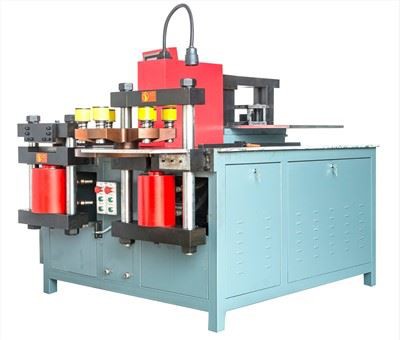
We then use high – quality materials and precision machining techniques to manufacture the mold. During the production process, we continuously monitor the quality of the busbars coming out of the mold. If we notice any issues related to the parting line, we quickly make the necessary adjustments.
Connect with Us
Bending Die If you’re in the market for busbar molds and want to ensure that you get a mold that takes all these factors into account, we’re here for you. We’ve got the experience and the expertise to design and manufacture top – quality busbar molds that will give you great final products. Reach out to us to start a conversation about your specific needs.
References
- "Mold Design Handbook" – Written by a team of industry experts, it provides in – depth knowledge about mold design, including the importance of parting line design.
- "Electrical Busbar Systems: Design, Installation, and Maintenance" – This book offers insights into the requirements and specifications of busbars, which are essential for understanding how the mold parting line affects the final product.
Jinan Deshang CNC Equipment Co., Ltd.
Jinan Deshang CNC Equipment Co., Ltd. is one of the leading busbar mold manufacturers and suppliers in China. We warmly welcome you to buy high-grade busbar mold for sale here from our factory. All OEM products are with high quality and competitive price. Contact us for more details.
Address: Room 409, Building 2, No. 59 Gongye South Road, High-tech Zone, Jinan City, Shandong Province
E-mail: lisa@busbarchina.com
WebSite: https://www.cncbusbar.com/
